
Choosing a Conservatory Roof Glass Cleaner
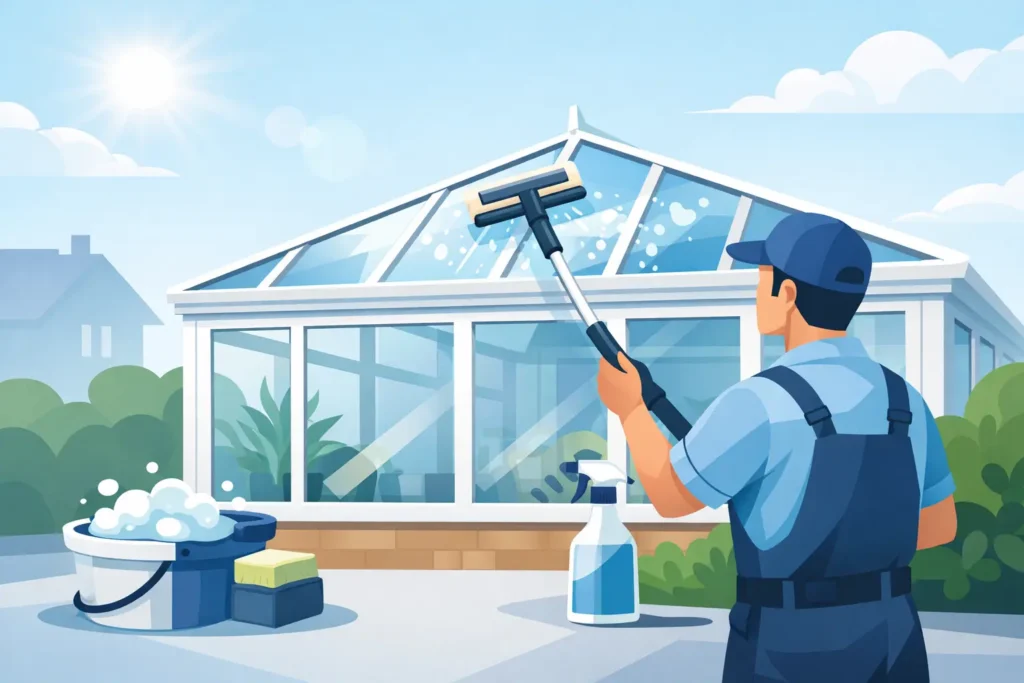
If your conservatory roof looked clear and bright when it was installed but now seems dull, streaky or green around the edges, the cleaner you use matters more than most people think. A good conservatory roof glass cleaner should lift grime without leaving residue, harming seals or turning a simple tidy-up into a risky job at height.
What a conservatory roof glass cleaner needs to do
Conservatory roof glass picks up a different kind of dirt from standard windows. It collects airborne dust, bird mess, traffic film, algae, leaf staining and, in some cases, the run-off from nearby trees or roof moss. Because the glass sits at an angle, rain does not always wash it evenly. Dirt can settle in sections, particularly near bars, seals and lower edges.
That means the best cleaner is not always the strongest one. In fact, overly harsh products often cause more problems than they solve. A conservatory roof glass cleaner should break down organic grime and surface contamination while rinsing clean. If it leaves a soapy film behind, that film attracts fresh dirt and the roof can start looking tired again surprisingly quickly.
There is also the frame material to think about. Many conservatories combine glass with uPVC, rubber seals and coated trims. Products that seem fine on one surface can mark another, especially if they are left to dry in direct sun.
Why ordinary glass sprays often disappoint
Many homeowners start with the same spray they use on indoor glass. It is understandable, but roof glass is a different job altogether. Household sprays are designed for fingerprints, light dust and mirrors. They are not made for months of outdoor grime, algae or baked-on residue.
The usual problem is smearing. Standard sprays can shift the top layer of dirt but fail to remove the build-up underneath. Once sunlight hits the roof, every streak becomes obvious. Some products also foam too much, which makes rinsing awkward and encourages water marks.
Another issue is access. Even if the product itself is suitable, applying it properly to an overhead exterior surface is difficult without the right equipment. The result is often patchy cleaning, with cleaner residue trapped around glazing bars and edges.
What to look for in a conservatory roof glass cleaner
A suitable conservatory roof glass cleaner should be non-abrasive, easy to rinse and safe for surrounding materials. Mild, purpose-made exterior glass cleaners are usually the safest starting point. They are designed to cut through outdoor grime without scratching or leaving a cloudy finish.
It also helps if the product works well with purified water or a low-residue rinse. That is one reason professional exterior cleaners often avoid thick detergents for glass roofs. The aim is not just to make the roof look cleaner on the day, but to leave it clear and streak-free once dry.
If your roof has light green staining or early algae growth, you may need something with a bit more cleaning power. Even then, stronger is not automatically better. A product that is too aggressive can damage seals, affect self-cleaning coatings on some glass, or leave discolouration on adjacent uPVC.
The safest approach is always to check whether the cleaner is suitable for exterior glass, uPVC and rubber seals, and whether it needs to be diluted correctly. Misuse is often the real problem.
What to avoid on conservatory roof glass
There are a few common mistakes that are worth avoiding altogether. Cream cleaners, scouring pads and anything abrasive should be ruled out straight away. They can leave fine scratches on the glass, and those marks become more visible over time as dirt settles into them.
Bleach-heavy mixes are also risky. While they may seem effective against green growth, they can affect surrounding materials and are not ideal where run-off may drip onto frames, walls or planting below. Strong solvents are another poor choice, especially on older conservatories where seals may already be weathered.
Pressure washing is where many jobs go wrong. It might look like a quick fix, but high pressure can force water into weak seals, dislodge trim and spread mess across the rest of the property. On paper it sounds efficient. In practice, it often creates a bigger maintenance issue.
The real issue is usually safety, not just cleaning power
When people search for a conservatory roof glass cleaner, they are often really trying to solve two problems at once. One is the dirt. The other is how to clean the roof safely.
This is where a lot of DIY attempts become a poor trade-off. Even with the right product, reaching the glass properly is not straightforward. Ladders are not ideal around conservatories, roof panels can be fragile, and leaning out from upper windows is plainly unsafe. A cleaner that works well from the ground with the right pole system is one thing. Climbing about with a bucket and cloth is another.
For larger conservatories, older roofs or properties with awkward access, the method matters just as much as the product. Safe-access equipment and pure-water systems often give a better finish with less risk to the glass, frames and people involved.
Why pure-water cleaning often gives better results
Professional conservatory roof cleaning often relies on purified water rather than heavy chemical use. The reason is simple. Purified water attracts dirt and rinses away without leaving the mineral spotting that ordinary tap water can cause.
On glass roofs, that makes a noticeable difference. Instead of chasing streaks with detergent, the cleaner can be removed more thoroughly and left to dry clear. Used with a water-fed pole and the right soft brush, this method is effective on general grime while being gentler on seals and surrounding materials.
It is not a magic answer for every roof. If there is heavy algae, stubborn staining or years of neglected build-up, a more tailored approach may be needed first. But for routine maintenance and safe regular cleaning, pure-water methods are hard to beat.
When a DIY clean is reasonable
A light clean can be sensible if the roof is easy to reach safely from the ground and the dirt is only superficial. In that case, a mild exterior glass cleaner, soft applicator and plenty of clean water may be enough. Working on a cool, overcast day also helps because products are less likely to dry too quickly and leave marks.
That said, even a straightforward DIY clean needs some caution. If the glass has developed green staining at the seals, if the roof has not been cleaned for a long time, or if access is awkward, it can quickly become a frustrating job. People often spend hours on it only to end up with missed patches and fresh smears.
When professional cleaning is the better option
If your conservatory roof is visibly dirty from ground level, professional cleaning is usually the more sensible route. The same applies if there are signs of algae, black spotting, blocked roof channels or dirt trapped around frames and finials.
A professional service should not simply wash the middle panels and leave the rest. The difference is in the full approach – glass, frames, bars and surrounding exterior details cleaned with methods suited to the materials. That is where modern equipment earns its keep. High-reach systems reduce risk, and a proper rinse helps prevent the streaky finish that so often follows DIY work.
For landlords and commercial sites, regular maintenance also makes more sense than waiting until the roof looks neglected. Build-up becomes harder to remove over time, and presentation matters whether it is a family home, office frontage or school entrance.
How often should conservatory roof glass be cleaned?
There is no single rule because exposure varies from property to property. A conservatory tucked under trees will need attention more often than one in an open position. Homes near busier roads may see faster build-up from traffic film, while shaded roofs tend to hold moisture and encourage algae.
As a guide, a professional clean once or twice a year suits many properties. Some benefit from more frequent visits, especially where appearance is important or where regular upkeep helps avoid heavier restorative cleaning later on. In areas like Aylesbury and across Buckinghamshire, seasonal changes can be enough to leave roof glass looking noticeably dull by the end of winter.
A cleaner roof means more than better appearance
Most people first notice the visual difference. More light comes through, the conservatory feels brighter and the whole rear of the property looks better cared for. But regular roof cleaning is also about spotting problems early.
Dirt can hide failing seals, blocked channels and the early signs of water run-off issues. When the roof is cleaned properly, these problems are easier to see and easier to deal with before they become costly repairs. That is one reason dependable exterior cleaning is not just cosmetic. It is part of looking after the property.
If you are weighing up which conservatory roof glass cleaner to use, the honest answer is that the right choice depends on the condition of the roof, the type of dirt and how safely the job can be done. A mild, suitable cleaner and careful method may be enough for light maintenance. For anything more than that, a professional clean is usually the quicker, safer and better-looking option. A clear conservatory roof should let the light in, not turn into a job you keep putting off.